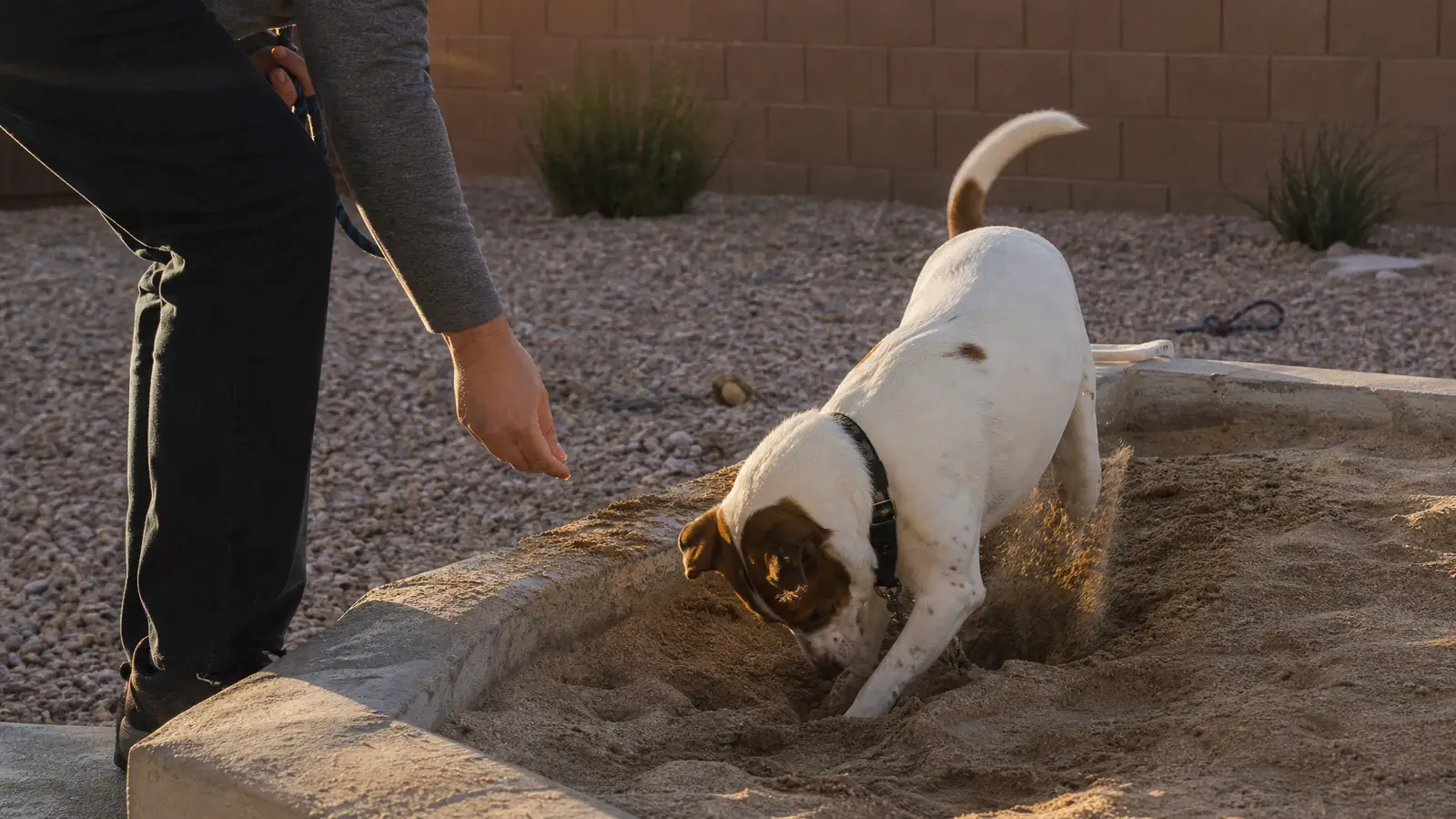
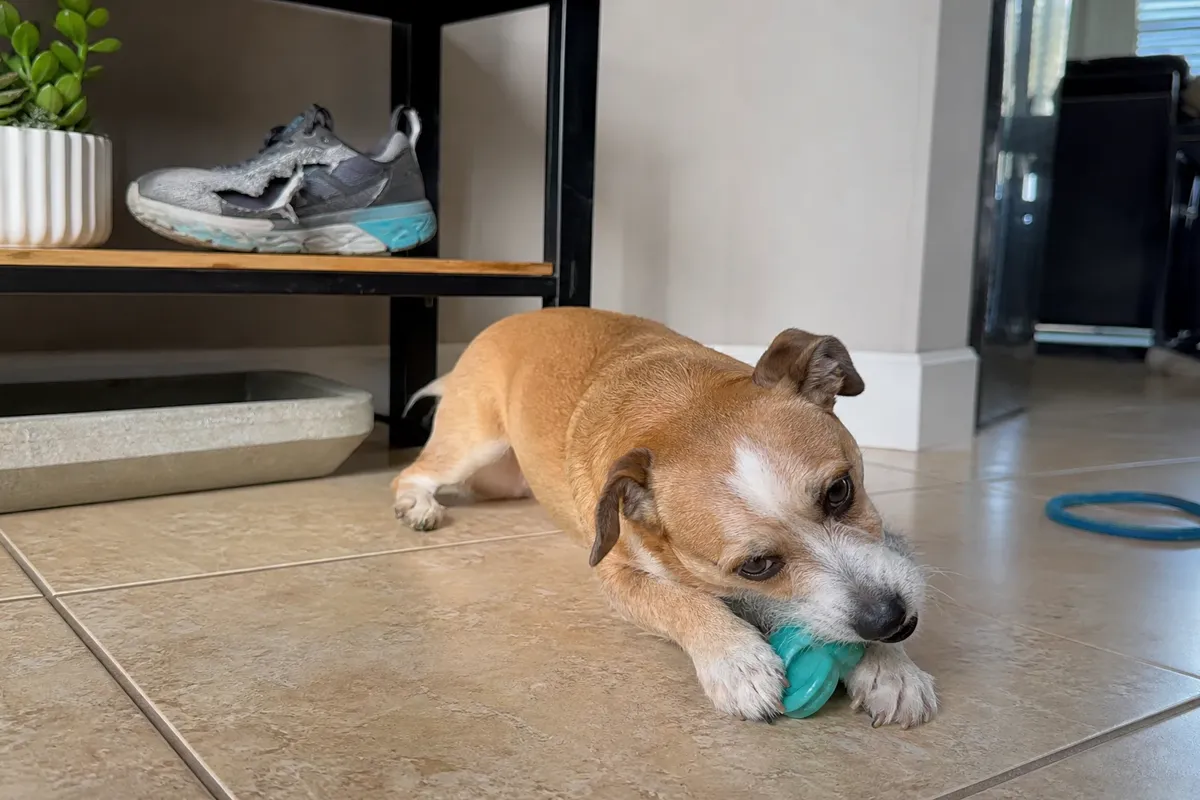
Chewing and digging are natural dog jobs, and they become problems when the dog is bored, anxious, teething or has no better outlet. We help North Las Vegas owners manage the space, give the habit a legal target and reward the right choices, with heat and desert wildlife in mind.
Tell us what gets chewed or dug, from the couch to the corner of the yard
- In-person training in North Las Vegas and nearby areas
- Online training anywhere
- Reward-based methods only
Why does my dog chew and dig?
Chewing relieves stress, soothes teething and passes time, and digging is a way to hunt, hide, cool off or escape. Which one you are seeing changes the plan.
| Behavior | Common reasons | What helps |
|---|---|---|
| Chewing furniture while you are out | Boredom, anxiety, no outlet | Chew toys, puzzles; see separation anxiety |
| Chewing hands or shoes (puppy) | Teething and exploring | Frozen chews, supervision; see puppy biting |
| Digging along the fence or block wall | Escape attempts or wildlife sounds | Check the line; supervise; reduce triggers |
| Digging a shallow hole in shade | Cooling off or resting | Give a shaded rest and a cool mat |
| Digging a "treasure" spot | Instinct and play | Create a sand digging box |
What can I do today?
Management stops the damage while training builds new habits.
- Put tempting items out of reach, and use a gate or pen when you cannot supervise.
- Offer a variety of safe chews and a food puzzle before you leave.
- Exercise before a quiet time: a short walk in the cool of the morning plus a sniffy game.
- For digging, designate a box with loose sand or soil and bury treats in it.
- Catch and redirect: when your dog goes for the wrong target, calmly swap in a toy and reward.
- Do not scold after the fact. Dogs do not link a scolding to what they did hours ago.
Check with your vet if chewing is sudden or involves ingesting non-food items, since this can be a medical or safety issue.
What is different about chewing and digging in North Las Vegas?
The yard is different here. Many homes have gravel, rock or block-wall perimeters, and a dog who digs near a wall may be testing it. NDOW says rattlesnakes are most active March to October and are often found in shaded yards, garages and covered patios, and that dogs should not put heads in holes or unseen places (see NDOW). A digging dog can find a snake. Check shaded corners before letting a dog loose and use supervised yard time instead of leaving the dog out for hours.
Tethering: some owners tie a digger in the yard. Nevada state law (NRS 574.100) says a dog may not be restrained with a tether shorter than 12 feet, with a pinch, prong or choke collar, or for more than 10 hours in a 24-hour period, with exceptions such as walking on a leash or tasks up to one hour (see NRS chapter 574). That is state law, not a city rule; we could not confirm a North Las Vegas tethering ordinance, so check the city's code if you have questions. A tether is also a poor fix for boredom.
Heat and wind: the National Weather Service describes blowing dust and sand as a chief irritant when strong winds hit, most commonly in spring and fall (NWS Las Vegas), and Clark County urges owners to protect pets from extreme heat (Clark County). On the hottest days, a yard is not a place to leave a bored dog. Bring dogs inside and give them chewing and digging games indoors.
Neighborhood: the Nevada Real Estate Group, a secondary marketing source, notes that HOA dues and special assessments can stack on newer homes (secondary source). If you live in an HOA, check your rules about holes, fencing and yard damage before you remodel.
A common situation North Las Vegas owners face: a dog left in a gravel backyard while everyone is at work, digging along the block wall and chewing the drip irrigation line. The answer is more supervision and indoor enrichment, not a bigger fence.
Last verified 2026-11-17. Fees and yard rules can change, so check the city's current pages before you fence, tether or relocate a dog.
How do we train for chewing and digging?
We set up the space, teach what is allowed and use rewards to build the habit.
- Space review: what the dog can reach, and what can hurt.
- Appropriate outlets: chews, puzzles and a digging area you build together.
- Redirect and reward: pay for chewing toys and digging in the box.
- Exercise and enrichment plan: the right mix for your dog's age, breed type and the season.
- Alone-time skills: link to anxiety training if distress is the driver.
We do not use deterrent sprays on the dog, shock collars or punishment. Timelines depend on the dog and on how consistently you manage the space.
Is in-person or online better?
Seeing the yard and house layout can make chewing and digging plans much more precise, so in-person fits many cases. Online coaching works well for enrichment plans and video review. Compare in-person private training with online dog training, then choose your program.
Frequently asked questions
Why does my dog dig more in summer?
Many dogs dig shallow holes to lie in cooler soil. Provide shade, a cool mat and indoor time on hot days. Clark County urges owners to protect pets from extreme heat.
Can I leave my dog tied up so he does not dig?
Nevada state law limits tethers: at least 12 feet, no pinch or choke collars and no more than 10 hours in 24. A tether does not solve digging and has safety risks.
Are deterrent sprays or bitter apple okay?
Bitter sprays on objects can help in some cases, but they do not teach what to chew. We focus on chews, management and rewards.
Will my dog grow out of chewing?
Puppies often chew less after teething, but adult dogs chew for stress and boredom. The habit fades when outlets and routines improve.
Is chewing a sign of separation anxiety?
It can be, especially around exits and when your dog is distressed when you leave. Chewing at other times may simply be boredom or teething.
Keep reading
- Separation anxiety trainingRead more →
- Puppy biting helpRead more →
- Training in the North Las Vegas climateRead more →
- In-person private dog training in North Las VegasRead more →
- Online dog training in North Las VegasRead more →
- Choose in-person or online trainingRead more →
Sources
- Nevada Department of Wildlife, Living With Rattlesnakes (last verified 2026-11-17)
- Nevada Revised Statutes chapter 574 (NRS 574.100, tethering; state law) (last verified 2026-11-17)
- National Weather Service Las Vegas, Climate of Las Vegas (last verified 2026-11-17)
- Clark County, pet heat safety news release (May 2025) (last verified 2026-11-17)
- Nevada Real Estate Group, North Las Vegas (secondary; real-estate marketing site) (last verified 2026-11-17)
Tell us what gets chewed or dug, from the couch to the corner of the yard
- In-person training in North Las Vegas and nearby areas
- Online training anywhere
- Reward-based methods only