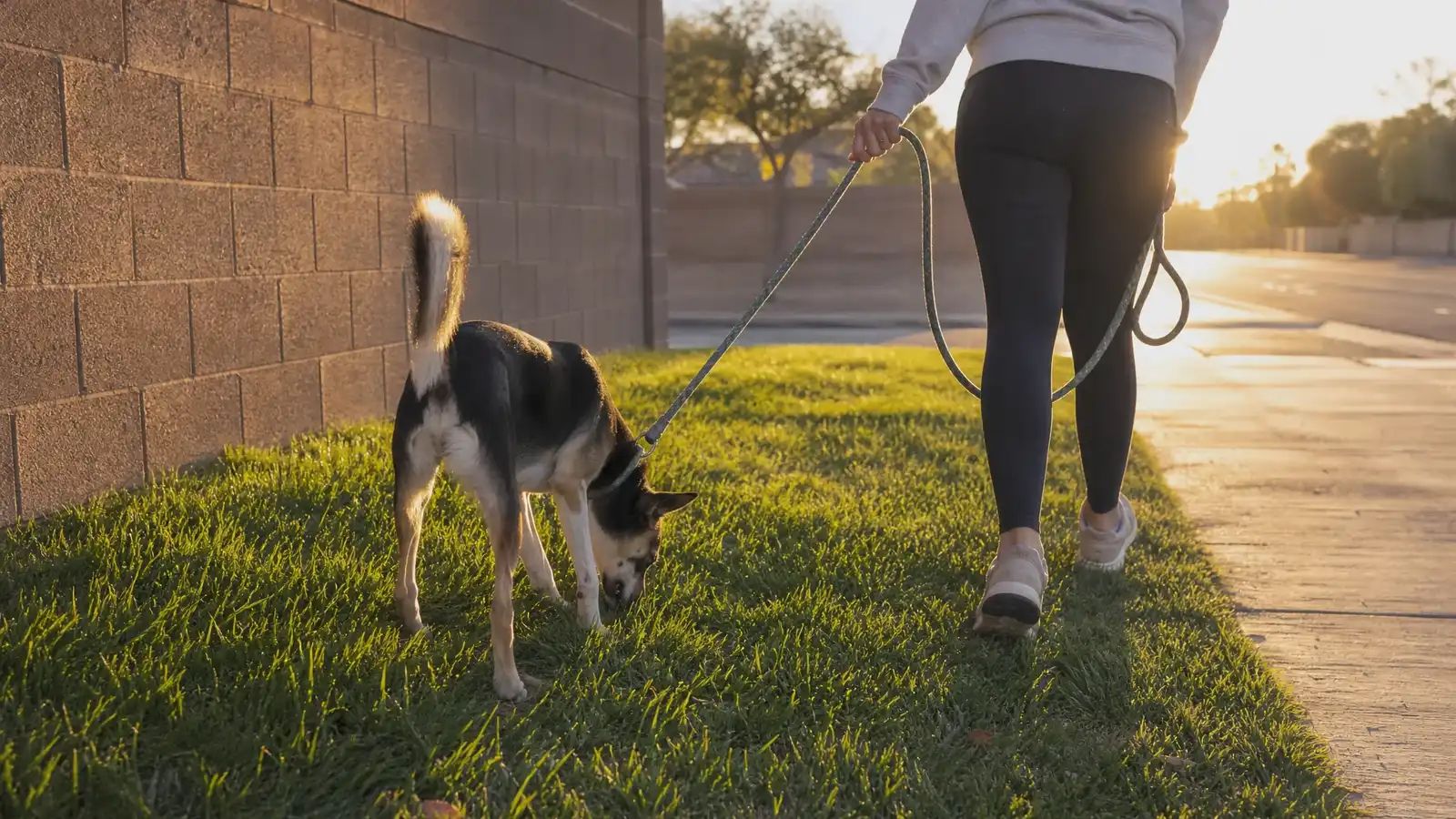
In North Las Vegas the weather decides when training can happen, so we schedule around hot pavement in summer, monsoon storms in July and August, wind and dust in spring and fall, and cold desert nights in winter. This page lays out what the weather agencies and Clark County say, season by season, and how we adapt, last verified 2026-11-17.
Tell us when you can train your dog, from early mornings to cool winter weekends
- In-person training in North Las Vegas and nearby areas
- Online training anywhere
- Reward-based methods only
How does summer heat change dog training in North Las Vegas?
It moves training to the coolest parts of the day and indoors. Clark County Animal Protection Services advises walking pets in the early morning or late evening, and gives a hand test: if the ground is too hot for the back of your hand, it is too hot for paws. It says pavement can be 40 to 60 degrees hotter than the air and can reach 160F.
The county also says to never leave a pet in a parked vehicle, because interior temperatures reach lethal levels within minutes even with windows cracked. For outdoor pets, Clark County code requires supplemental cooling, such as misters, swamp coolers, fans or kiddie pools, when the NWS issues an Extreme Heat Warning or temperatures are expected to top 105F. That is a county rule, not a confirmed North Las Vegas city rule, but the advice is sound anywhere in the valley.
NWS Las Vegas notes the urban heat island keeps overnight lows 5 to 15 degrees warmer at the airport than in outlying areas, so evening walks may still be warm. Test the ground, even after sunset.
What does a North Las Vegas training year look like?
We plan training by season. The table shows what the sources say and what we do.
| Season | What the sources say | How we adapt |
|---|---|---|
| Summer (June to September) | Triple-digit heat; hot pavement; monsoon storms in July and August | Early-morning sessions, short indoor games, heat-safe breaks, storm-fear prep |
| Fall | Monsoon wanes by September; wind and dust more common; sharp temperature swings | Longer outdoor sessions, leash and recall practice, dust checks for eyes and coat |
| Winter | Coldest nights drop into the 20s; snow is rare at the airport | Midday sessions, coats for thin-coated or small dogs, longer outings |
| Spring | Wind and dust; sharp temperature changes; snakes become active from March | Leash control, leave-it work, snake-aware routes |
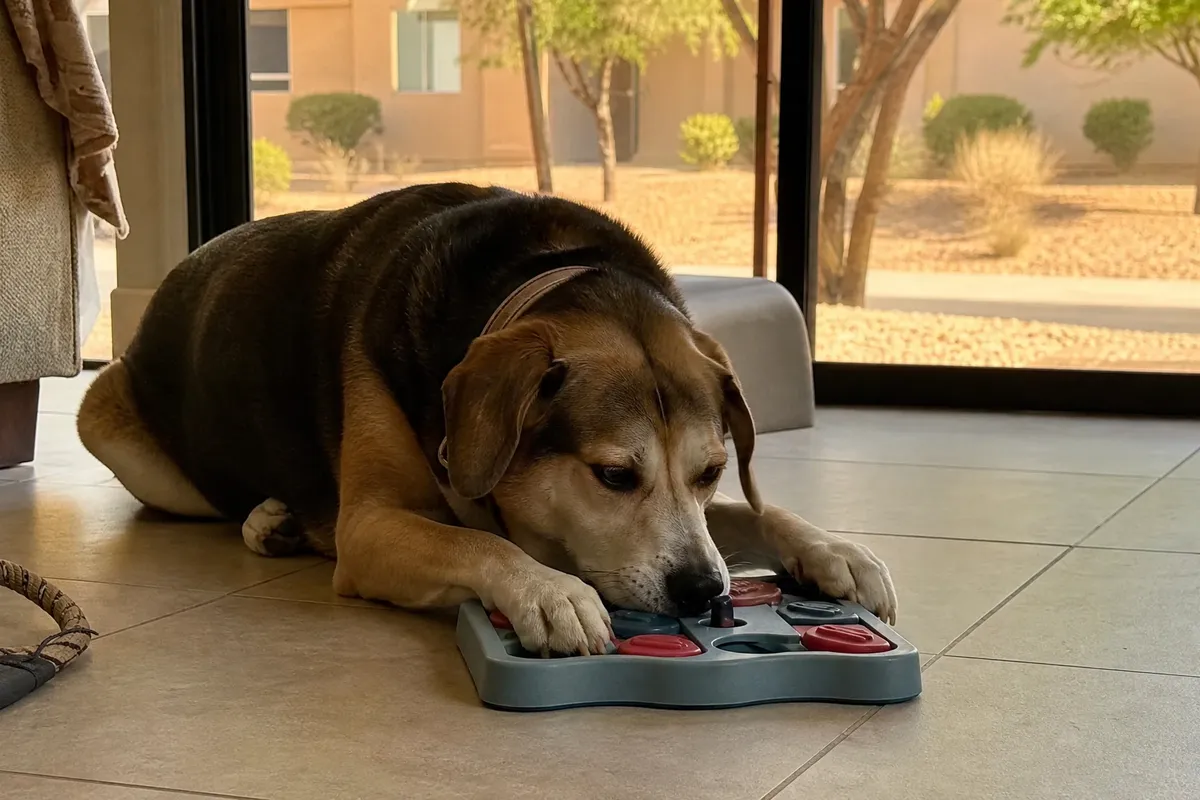
Fall and winter are the best seasons for building skills that need long outdoor sessions, like recall and loose-leash walking. We use the heat months for indoor games, impulse control and handling.
What about monsoon storms, flash floods and washes?
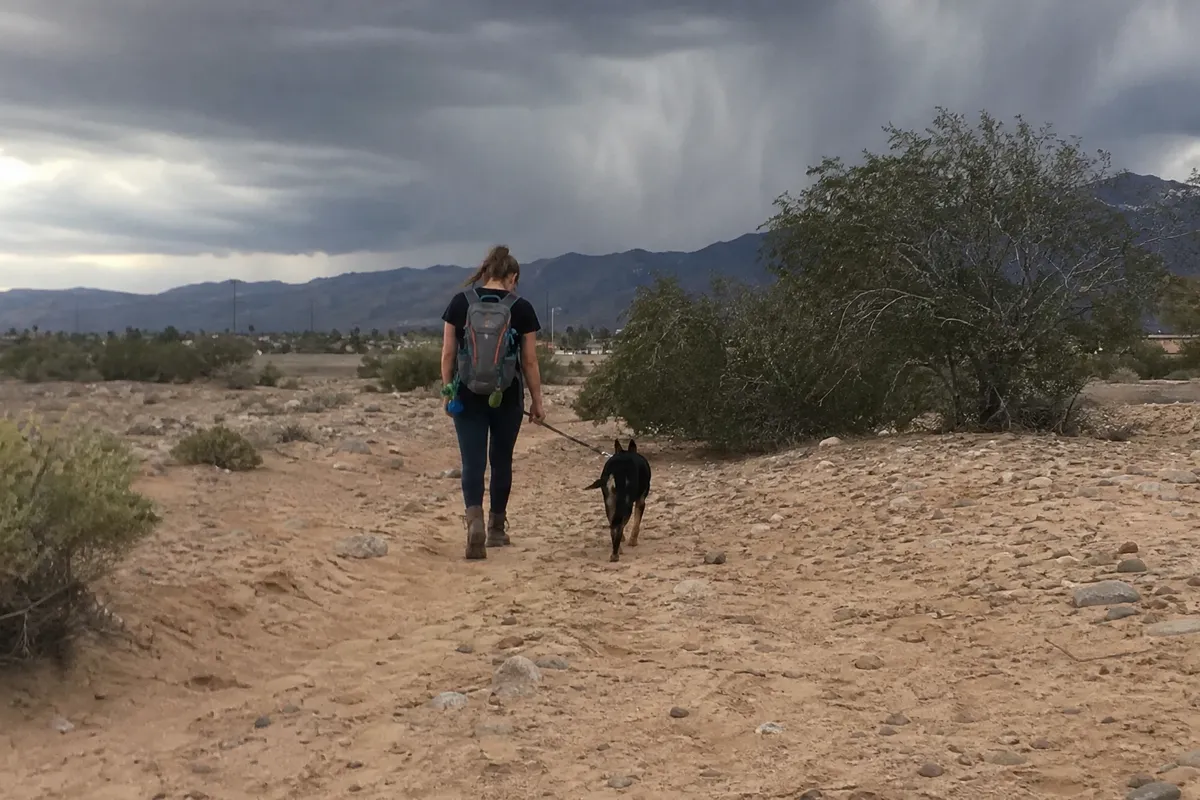
NWS Las Vegas says July and August bring a push of monsoon moisture, higher humidity and scattered thunderstorms that form in the surrounding mountains and move into the valley. The main impact is heavy rain and flash flooding that sweeps down normally dry washes or pours into low-lying areas. By September the monsoon typically wanes.
For dogs, that means two things. Do not walk, swim or drive through flood water, and avoid wash trails when storms are forecast; Ice Age Fossils State Park says wash conditions vary. And storm fear can hit dogs that were fine all year, especially after July 4 fireworks. We cover that in our guide to fireworks and storm fear.
Which desert wildlife should North Las Vegas owners plan for?
Rattlesnakes and coyotes. NDOW says rattlesnakes are most active from March to October, day or night, and that in summer above 90F they shelter, often in shaded urban yards, garages and covered patios. Walk dogs on a six-foot leash, never let them put heads in holes or unseen places, and look into snake-avoidance training.
The city's Animal Protection page says coyotes live throughout Nevada, in rural and urban areas, and are wild animals; city animal protection does not handle indigenous wildlife complaints unless the animal looks injured or sick. A KTNV report quoting NDOW advises not letting small dogs out alone, especially from dusk to dawn, and closing pet doors at night. That report names Las Vegas and Boulder City, not North Las Vegas.
We train a reliable "leave it," a close-by recall, and calm leash walking so you can steer away from wildlife. We do not teach confrontation with wildlife.
A common situation North Las Vegas owners face: the 6 a.m. walk that turns into the 9 a.m. walk
Here is a common situation North Las Vegas owners face. An owner who works early plans a walk before the heat, but the schedule slips. At 9 a.m. in summer the sidewalks are already hot, and a high-energy dog pulls toward the park. The dog gets frustrated and the owner stays outside too long.
We plan the opposite. We make a short, structured early walk, then use the hot hours for indoor training: sit and down practice, mat settling, hand-feeding, and nose-work games. A mentally tired dog is calmer on the next walk than a dog that did a rushed hot loop. That also helps renters in apartments, who often do not have a yard for a quick break.
A local audience insight: because the valley's dry heat, wind and dust can change quickly, a plan with an indoor fallback beats a plan that depends on one perfect morning.
How do we train in a desert climate, in person or online?
We use reward-based training, short sessions, management and owner coaching, and humane tools only.
- Time of day: practice early or late, or indoors.
- Surface checks: the back-of-hand test before every outing.
- Short sessions: a few minutes, then water and shade.
- Indoor games: impulse control, nose work and handling.
- Weather plans: a storm-fear routine and a safe room.
How quickly your dog improves depends on the dog and your consistency, and weather days will change the schedule, so we build in flexibility.
Online lessons work well in the hottest weeks because practice moves indoors and we coach from video. In-person lessons help when we need to see your dog on its usual route or in the yard. We will not schedule outdoor sessions in unsafe heat, so tell us what time of day works for you.
Frequently asked questions
What temperature is too hot to walk my dog?
We do not give a number. Clark County gives the hand test: if the ground is too hot for the back of your hand, it is too hot for your dog's paws. Pavement can be 40 to 60 degrees hotter than the air.
Do I need to bring my dog inside during an Extreme Heat Warning?
Clark County code requires supplemental cooling for outdoor pets during an Extreme Heat Warning or when temperatures are expected above 105F. That is a county rule; we advise keeping dogs indoors in hot weather.
Is it safe to walk near washes in summer?
Avoid wash trails when storms are forecast. NWS says monsoon thunderstorms bring flash flooding in normally dry washes.
Are rattlesnakes a problem in North Las Vegas?
NDOW says rattlesnakes are found in urban areas, including shaded yards and garages, and are most active March to October. Use a six-foot leash and keep dogs out of brush.
When is the best time of year to start training?
Fall through spring is easiest for long outdoor sessions. You can start any time: in summer we use early mornings and indoor work.
Keep reading
- Choose in-person or online dog trainingRead more →
- in-person training scheduled around the weatherRead more →
- online dog training for hot-weather daysRead more →
- fireworks and storm fear helpRead more →
- dog-friendly trails and patiosRead more →
- leash pulling helpRead more →
Sources
- Clark County, pet heat safety news release (last verified 2026-11-17)
- NWS Las Vegas, Climate of Las Vegas (last verified 2026-11-17)
- Nevada Department of Wildlife, Living With Rattlesnakes (last verified 2026-11-17)
- KTNV, urban coyote encounters (NDOW advice) (last verified 2026-11-17)
- City of North Las Vegas, Animal Protection (last verified 2026-11-17)
- Clark County, safe and sane fireworks news release (June 2026) (last verified 2026-11-17)
- Nevada State Parks, Ice Age Fossils State Park (last verified 2026-11-17)
Tell us when you can train your dog, from early mornings to cool winter weekends
- In-person training in North Las Vegas and nearby areas
- Online training anywhere
- Reward-based methods only