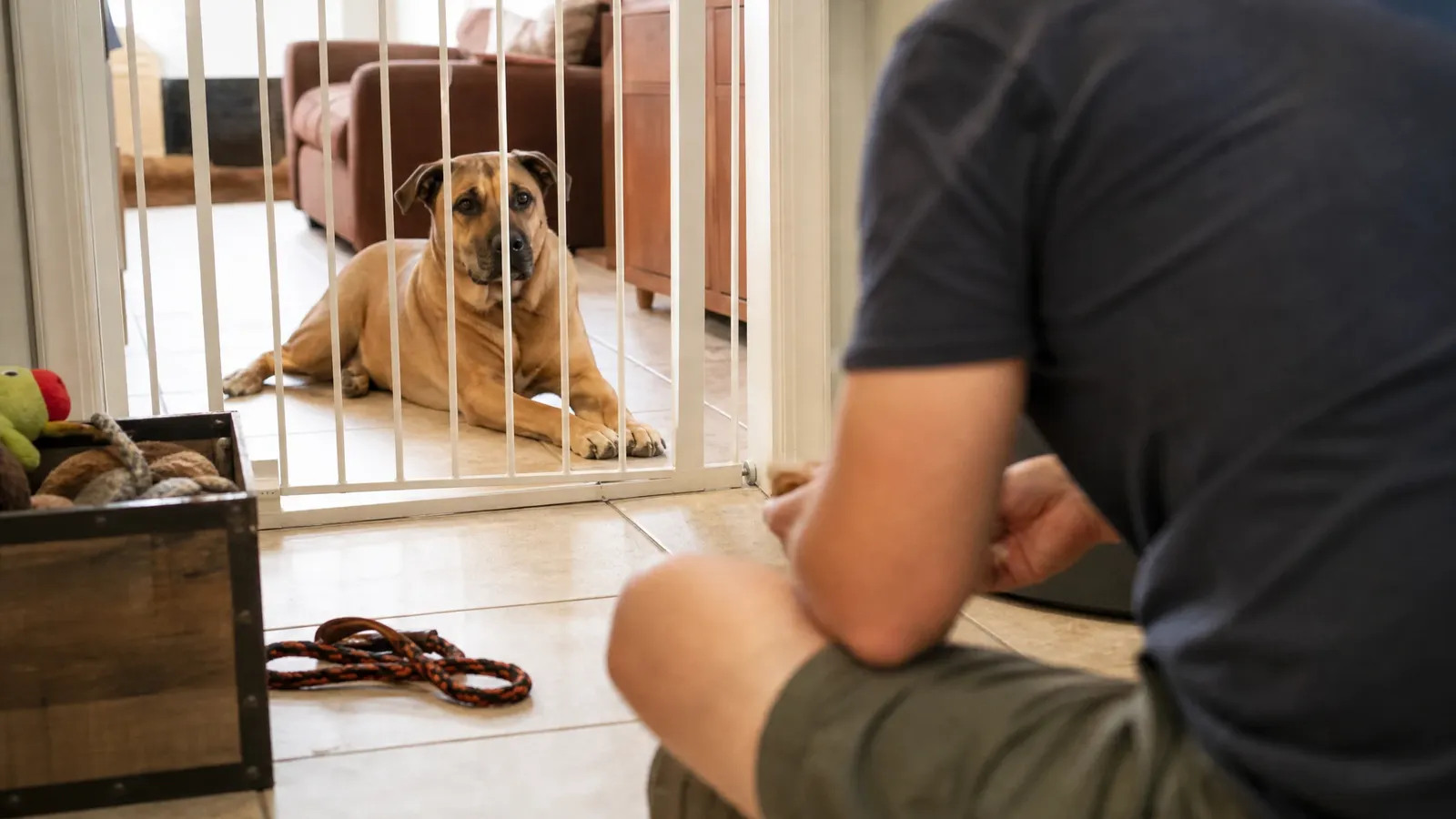
Aggression is a behavior with a cause, usually fear, pain, guarding or frustration, and the first job is safety: management, a vet check and a plan that keeps everyone out of harm's way. We help North Las Vegas owners with reward-based behavior change and clear safety steps, and we do not use shock, prong or intimidation.
Tell us what your dog did and when, so we can build a safety plan before anything else
- In-person training in North Las Vegas and nearby areas
- Online training anywhere
- Reward-based methods only
Why is my dog growling, snapping or biting?
Dogs show aggression because it has worked: the scary thing went away. The cause shapes the plan, so we sort the pattern before we choose a tool.
| Pattern | Likely driver | First step |
|---|---|---|
| Growls when approached while eating or chewing | Guarding; see resource guarding | Management and trade-up games, no taking things away |
| Lunges or snaps at dogs or people on walks | Fear or frustration; see leash reactivity | Distance and counter-conditioning |
| Snaps when touched, moved or lifted | Pain, fear or sensitivity | Vet exam first, then consent-based handling |
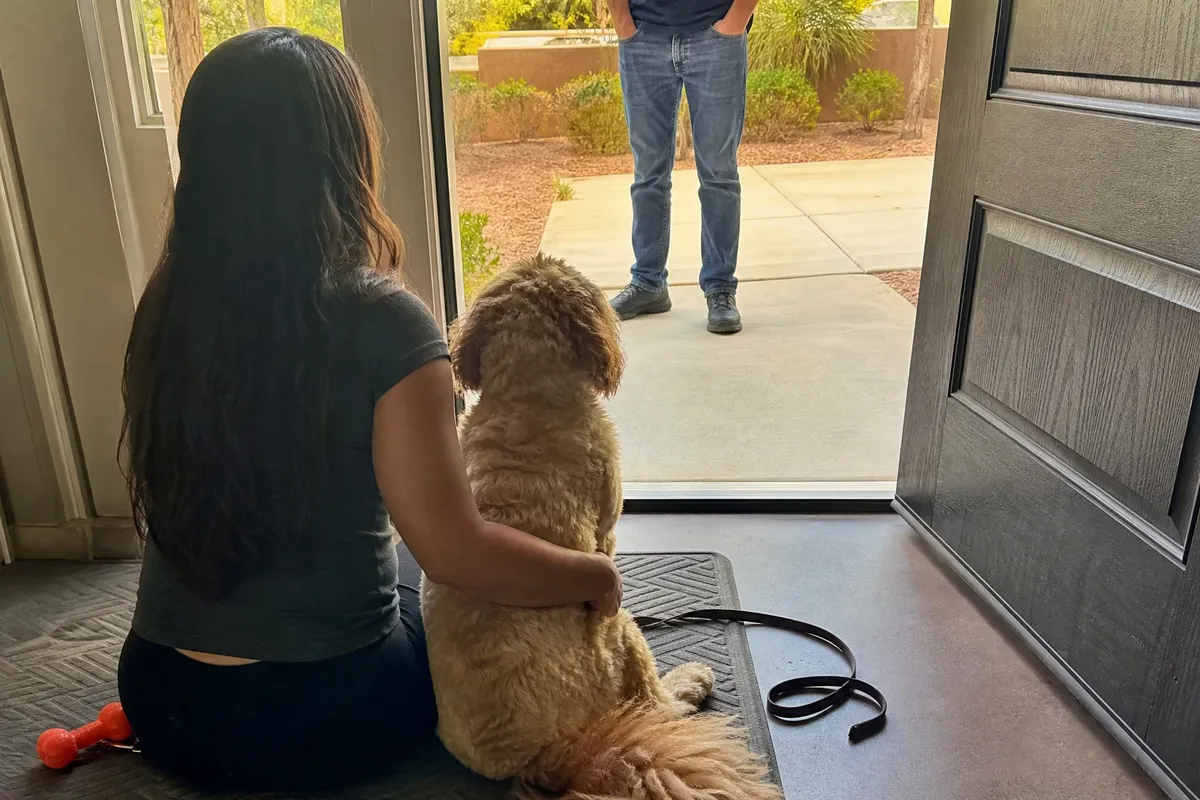
| Bites guests or strangers at the door | Fear and territory | Management plan, gated greetings, desensitization |
| Sudden change in an older dog | Pain, illness or cognitive change | Vet visit before any training |
Aggression that starts suddenly, or comes with limping, drooling or other changes, deserves a vet visit first. See our vets guide for what we verified locally.
What should I do right now if my dog has bitten or threatened someone?
Put safety ahead of progress. A bite is information, and the first response is to make the next one impossible.
- Separate the dog from the trigger with a gate, closed door or crate, and do not rely on willpower or supervision alone.
- Do not punish a growl. It is a warning, and a dog punished for warning may skip it and bite.
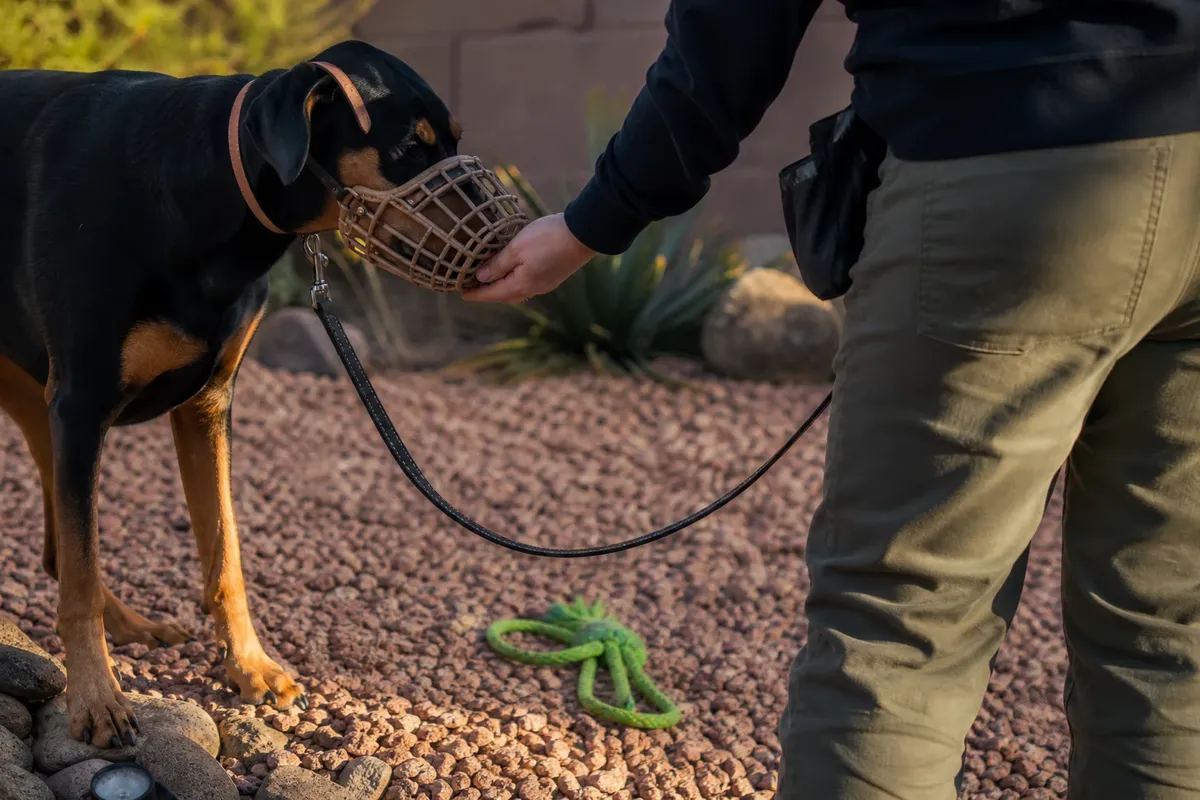
- Use a leash and a basket muzzle that your dog has been trained to accept, for walks and vet visits, if needed.
- Write down what happened just before: where, who, what the dog was doing. Patterns tell us a lot.
- Book a vet exam to rule out pain or illness.
- Tell us about the bite history when you choose a program so we can plan the safest format.
What does Nevada law say about dangerous dogs?
Here is what Nevada state law says, labeled as state law rather than a city rule. Under NRS 202.500 a dog can be declared "dangerous" if, for example, it behaved menacingly without provocation on two separate occasions within 18 months off its owner's premises or while not confined. A dog is "vicious" if it killed or caused substantial bodily harm to a person without provocation, or kept behaving dangerously after the owner was notified. The statute also says a dog may not be found dangerous or vicious based solely on breed, and a local authority may not adopt an ordinance that does so. Keeping or transferring a vicious dog more than seven days after notice is a misdemeanor, and substantial bodily harm from a known vicious dog is a category D felony (see NRS chapter 202).
What we could not confirm is the city's own dangerous-dog ordinance. Reports point to Title 6 of the North Las Vegas Municipal Code, but the text was not reachable for us, so we do not describe city rules on muzzling, insurance or registration. The city's published pages cover the basics: leash law, licensing, noise and the three-dog limit (see Animal Protection Services). Read those pages and ask the city directly if you have a legal question; we are trainers, not attorneys.
A common situation North Las Vegas owners face: a dog who is fine with the family but barks and snaps at visitors in the entry, and a neighbor with a child coming over next week. The fix is not a stern talking-to. It is a closed door or gate, a calm plan for introductions and a trainer who can coach the household.
Last verified 2026-11-17. Local and Nevada dangerous-dog rules can change, so check the official pages before you decide anything about a dog with a bite history.
How do we train a dog with aggression?
We lower the stakes, then change the feeling behind the behavior. That is management plus counter-conditioning and desensitization, in short sessions at a level your dog can handle.
- Safety setup: gates, leash plans, muzzle training where it helps, and a list of "no-go" situations for now.
- Trigger map: we identify who, what, where and how close, so we can work below the threshold.
- Reward-based change: the trigger predicts something good, at a distance that keeps the dog relaxed.
- Skills that help: a settle on a mat, a hand target, a recall away from the trigger.
- Owner coaching: you learn to read stress signals early and to avoid the situations that rehearse the behavior.
Veterinary behavior bodies (AVSAB, AAHA) advise against aversive tools like shock and prong collars, and that is why we do not use them. See the AVSAB position. We do not promise a cure or a timeline. Outcomes depend on the dog and on how consistently the household follows the plan.
Is in-person or online training right for an aggressive dog?
If anyone has been bitten, in-person is usually the better fit, because we need to see your home, your dog's body language and your handling in real time. Online can work for mild cases, for follow-ups and for video review once a safety plan is in place. Compare in-person private training and online dog training, then choose your program and tell us about any bite history.
Frequently asked questions
Is my dog aggressive or just reactive?
The words overlap. Reactivity usually means strong reactions to specific triggers on leash, while aggression can include bites or serious threats. We look at the actual behavior, not the label, and make a plan from that.
Will my dog be taken away or declared dangerous after a bite?
Under Nevada state law (NRS 202.500), "dangerous" and "vicious" have specific definitions based on behavior and provocation, not breed. We cannot give legal advice or say how the city handles them, so read the statute and ask the city directly.
Can you train aggression out of a dog?
We can often reduce it and manage it, but we cannot promise a cure. Aggression comes from fear, pain, guarding or learned habits, and progress depends on the dog and on the household's consistency.
Should I use a prong or shock collar for a dog that bites?
No. AVSAB and AAHA advise against aversive tools, and they can raise fear and aggression. We use management, a trained basket muzzle where needed, and reward-based training.
Does breed decide whether a dog is dangerous in Nevada?
State law says a dog may not be found dangerous or vicious based solely on breed, and local authorities may not adopt an ordinance that does so (NRS 202.500). Behavior and the circumstances decide.
Keep reading
- Leash reactivity trainingRead more →
- Resource guarding helpRead more →
- North Las Vegas vets and emergency vetsRead more →
- In-person private dog training in North Las VegasRead more →
- Online dog training in North Las VegasRead more →
- Choose in-person or online trainingRead more →
Sources
- Nevada Revised Statutes chapter 202 (NRS 202.500, dangerous and vicious dogs; state law) (last verified 2026-11-17)
- City of North Las Vegas, Animal Protection Services (page opened via archive snapshot) (last verified 2026-11-17)
- AVSAB humane dog training position (via Purdue Canine Welfare Science Center) (last verified 2026-11-17)
Tell us what your dog did and when, so we can build a safety plan before anything else
- In-person training in North Las Vegas and nearby areas
- Online training anywhere
- Reward-based methods only