
Veterinary behavior bodies advise against aversive tools, and we train with rewards, management and humane tools only. This page explains the methods you will hear about in North Las Vegas, what the AVSAB and AAHA say, and the red flags we would want you to catch in any trainer, us included.
Want a plan built on rewards, not pain? Choose in-person or online and we will explain exactly what we use
- In-person training in North Las Vegas and nearby areas
- Online training anywhere
- Reward-based methods only
What training methods will you meet, and what do experts advise?
There are broadly two families: reward-based training, which pays the dog for behavior we like, and aversive training, which uses discomfort or fear to stop behavior. Veterinary behavior organizations advise against the second.
| Source | What it says |
|---|---|
| AVSAB humane training position statement | Reward-based methods are supported for all canine training, and there is no evidence aversive training is necessary. This was read through a Purdue-hosted summary; the primary PDF could not be retrieved. |
| AAHA 2015 behavior management guidelines | The task force opposes training methods that use aversive techniques; the owner-facing page names shock and prong collars and alpha rolls. We read this from a search excerpt because the page blocked our check. |
We are not veterinarians and we do not diagnose, but we follow that guidance. Last verified 2026-11-17.
A note about the local market. Some trainers in the Las Vegas valley advertise packages that include an electronic collar. We have not named them and do not recommend them. If a package includes a tool, ask what it does to the dog and what the plan is if the dog shows fear.
What are the red flags in a dog trainer?
Any trainer who promises a guaranteed result, skips the owner or relies on fear is a red flag. Use this list with any trainer, us included.
- Guaranteed results or fixed timelines. Progress depends on the dog and the owner's consistency, so a promise is a warning sign.
- Shock, prong or choke collars, leash jerks and alpha rolls. These are the tools and techniques the veterinary behavior material warns about.
- "Dominance" explanations. A dog that pulls, barks or jumps usually lacks a skill or is stressed; it is not plotting to take over.
- Training that happens without you. You live with the dog; you need to know how to practice.
- Dismissing health. Sudden changes in behavior can have a medical cause; a good trainer suggests a vet visit.
- Refusing to explain. If a trainer cannot tell you what happens when the dog gets it wrong, ask more questions.
- Outdoor work at noon in July. Clark County says pavement can run 40 to 60 degrees hotter than the air.
For more questions, see questions to ask before hiring a trainer.
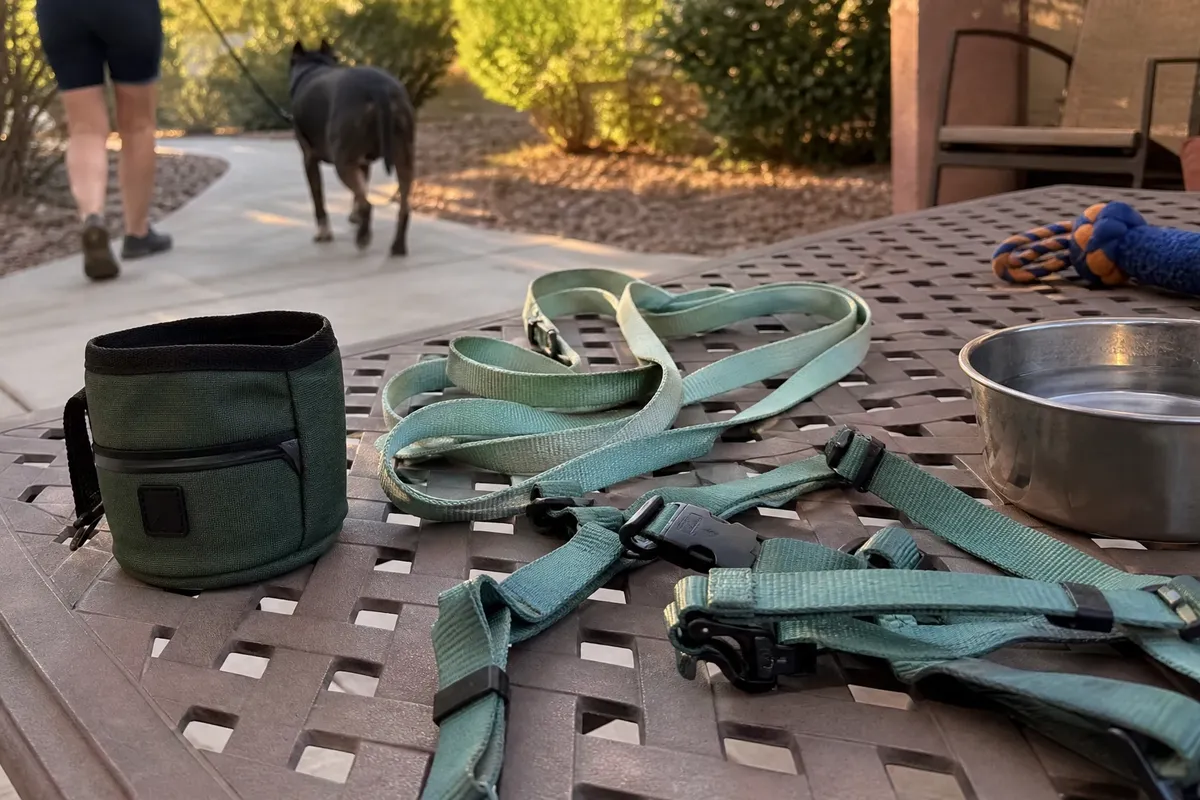
Does Nevada law say anything about training collars?
Nevada state law, not a city rule, addresses collars used for restraint. NRS 574.100 says a dog may not be restrained by a tether, chain or similar device under 12 feet in length or one that lets the dog reach something that could strangle it. It also says a dog may not be restrained with a prong, pinch or choke collar, and may not be restrained for more than 10 hours in a 24-hour period. Exceptions include a dog being walked on a leash and temporary tasks of up to one hour.
That law is about restraint, not training. It does not tell you whether a given training tool is safe, and it does not replace the vets' advice. We also did not find North Las Vegas city code on tethering, so we are not stating one; read the statute on the Nevada Legislature site. Other leash rules are on the city's Animal Protection page, which says all pets must be leashed unless confined on the owner's property and states no leash length.
How do local conditions make methods matter more?
Heat, fear triggers and wildlife raise the stakes for every training choice. A dog that is hot, thirsty or burning its paws cannot learn, and a dog trained with fear may escape when fireworks go off. Clark County says its shelter population rises by hundreds over July 4 because frightened pets run, and that most lost pets are never reclaimed.
The Nevada Department of Wildlife says rattlesnakes are most active from March to October and advises a 6-foot leash. A reward-based recall, a settled "leave it" and consistent management cost nothing and carry no risk to your dog.
A common situation North Las Vegas owners face: a dog who bolts when fireworks start. A punishment-based approach would add fear to fear. We would instead teach a rewarded retreat to a quiet room, play recorded sound at a very low volume, and increase it only while the dog stays relaxed, with a secure fence and ID tags in place before the holiday.
How do we train?
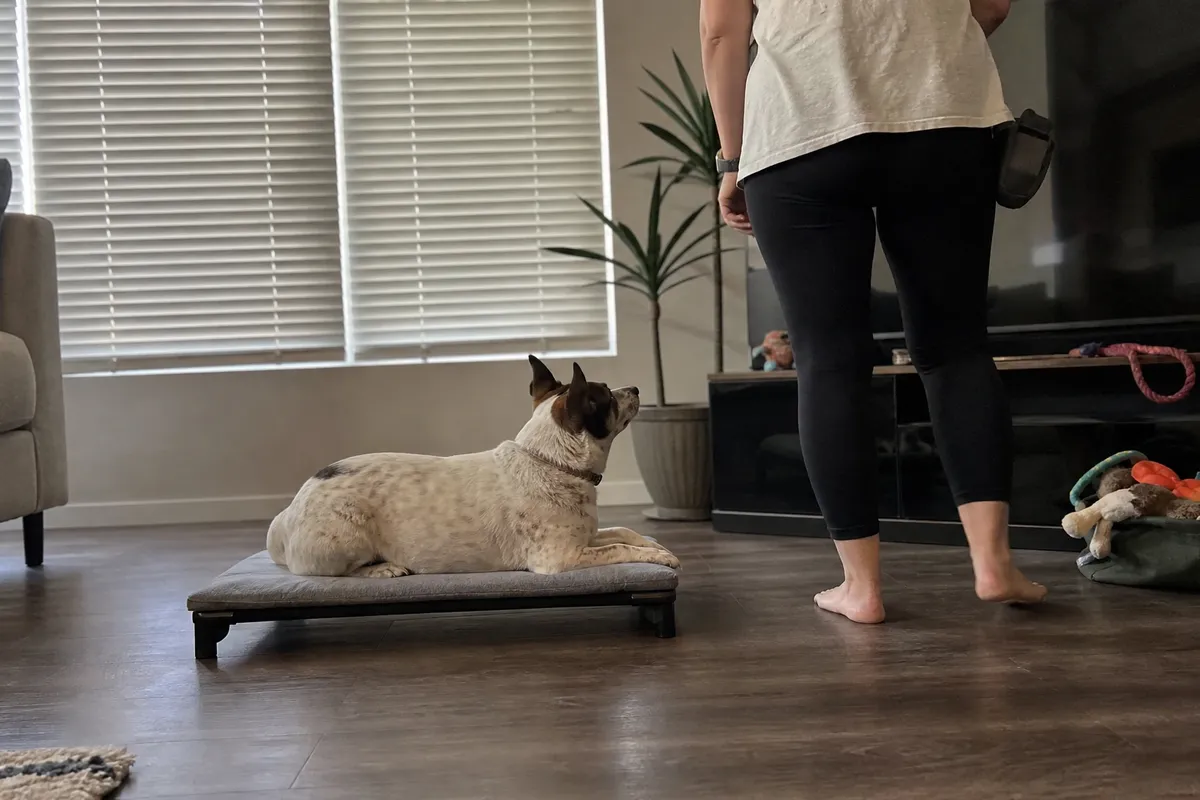
We use reward-based methods and humane tools only, with the owner doing most of the practice. We do not use shock, prong or choke collars, leash jerks or physical intimidation.
- Management and prevention: we set up the home, leash and routine so the dog cannot rehearse the problem.
- Reward-based teaching: food, toys and play pay the dog for what we want.
- Gradual desensitization and counter-conditioning: for fear, reactivity and noise, we change feelings in small steps.
- Short, consistent sessions: a few minutes, ended while the dog is still keen.
- Owner coaching: we show you what to do and why.
We make no timeline promises. To begin, choose in-person or online on the start page, and tell us about any bite history or safety concern when you do.
Frequently asked questions
Do you use shock, prong or choke collars?
No. We use humane tools only. Veterinary behavior bodies, including AVSAB and AAHA, advise against aversive methods.
Is an e-collar ever necessary?
AVSAB says there is no evidence aversive training is necessary. We do not use electronic collars and we plan around reward-based teaching and management.
Does Nevada ban prong collars?
State law, NRS 574.100, bars restraining a dog with a prong, pinch or choke collar. That is a restraint rule, not a full training-tool rule, so read the statute.
What if my dog does not respond to treats?
We look for a different reward, such as a toy, play or a favorite sniff, and adjust the setting. Dogs who ignore food are often stressed or overfed, not untrainable.
How long until I see results?
It depends on the dog and on how consistently you practice. We make no guarantees about timelines.
Keep reading
- dog trainer certifications explainedRead more →
- questions to ask before hiring a trainerRead more →
- how to choose a dog trainer in North Las VegasRead more →
- in-person dog trainingRead more →
- online dog trainingRead more →
- choose in-person or online trainingRead more →
Sources
- Purdue Canine Welfare Science Center, AVSAB humane dog training position statement (last verified 2026-11-17)
- AAHA, 2015 behavior management guidelines, take-home messages (last verified 2026-11-17)
- Nevada Revised Statutes chapter 574 (NRS 574.100) (last verified 2026-11-17)
- City of North Las Vegas, Animal Protection (last verified 2026-11-17)
- Clark County, protecting pets in extreme heat (last verified 2026-11-17)
- Clark County, safe and sane fireworks (last verified 2026-11-17)
- Nevada Department of Wildlife, living with rattlesnakes (last verified 2026-11-17)
- FOX 5 Vegas, fireworks and lost pets (2026-07-03) (last verified 2026-11-17)
Want a plan built on rewards, not pain? Choose in-person or online and we will explain exactly what we use
- In-person training in North Las Vegas and nearby areas
- Online training anywhere
- Reward-based methods only