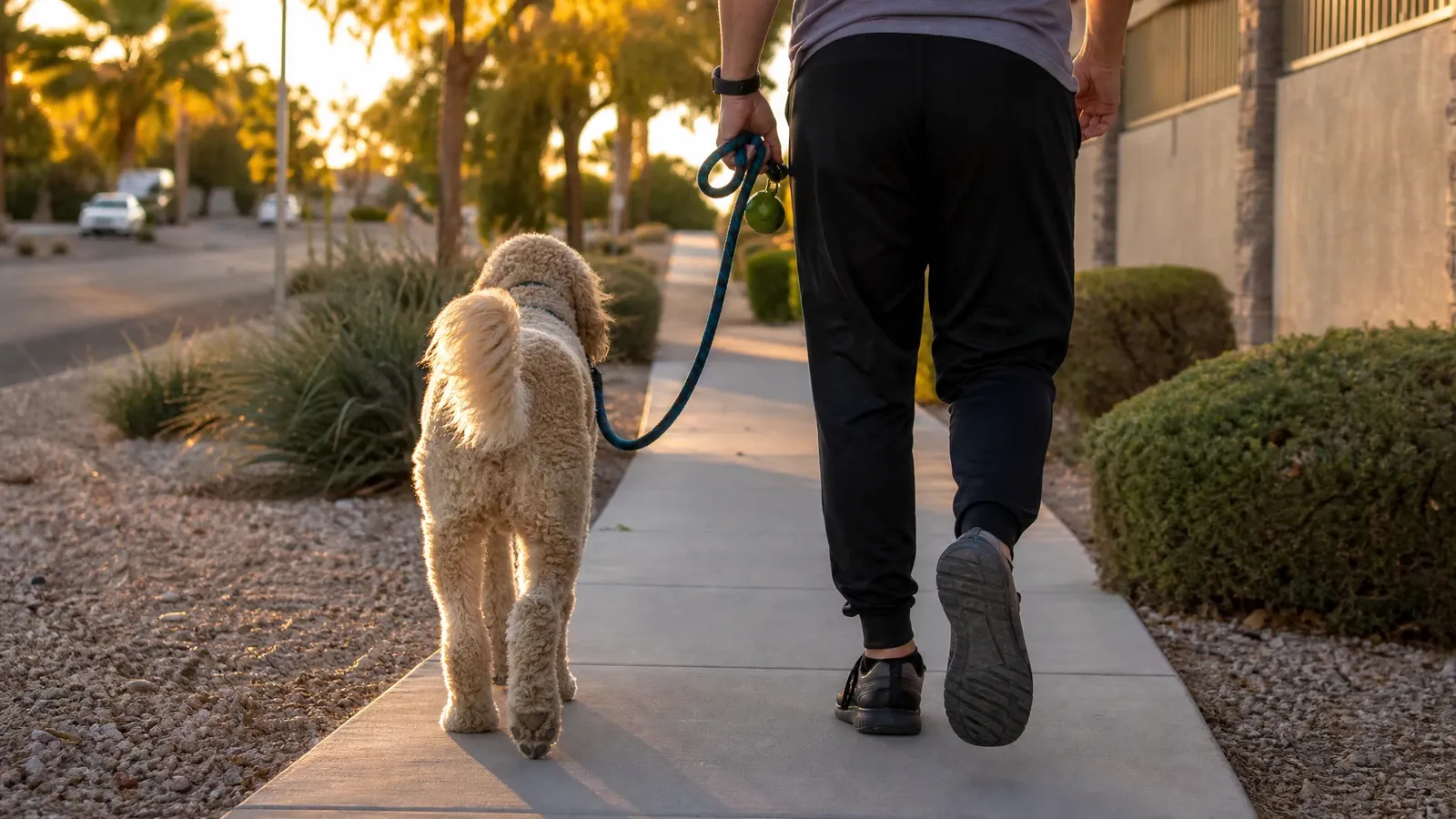
If every walk feels like a tug of war, you are not alone, and it is fixable without harsh tools. Dogs pull because it works, so we teach them that a slack leash is what gets them where they want to go. Local details here were last verified 2026-11-17.
Tired of being towed down the block? Tell us where you walk and how your dog pulls.
- In-person training in North Las Vegas and nearby areas
- Online training anywhere
- Reward-based methods only
Why does my dog pull on the leash?
Because pulling pays off. Every time a tight leash leads to a sniff, a squirrel or the park gate, the dog learns that tension works. Dogs also walk faster than people, get excited outdoors and have no natural idea that a leash means "stay near."
- Pulling is rewarded by forward movement
- Excitement and scent drives run high outside
- Poorly fitted equipment can encourage pulling
- Mixed rules ("sometimes it is fine") keep the habit alive
Dogs are not trying to dominate you. They are doing what has been paid for. When pulling slows or stops, the cause is a clearer deal, not a stronger arm.
Is there a quick fix?
There is a fast first step but no shortcut to a perfect heel. Stop moving forward when the leash tightens, move again when it slackens, and reward the dog for being beside you. A front-clip harness can reduce the pull while you teach, though it does not teach the dog anything on its own.
| Do | Do not |
|---|---|
| Reward the dog for walking beside you, at your pace | Yank, jerk or pop the leash |
| Change direction calmly when the leash tightens | Let the dog drag you to a sniff, then expect a slack leash |
| Start on a short, quiet route | Start on the busiest park path |
| End the walk while the dog is still doing well | Practice until you are both frustrated |
How do we teach a loose leash, step by step?
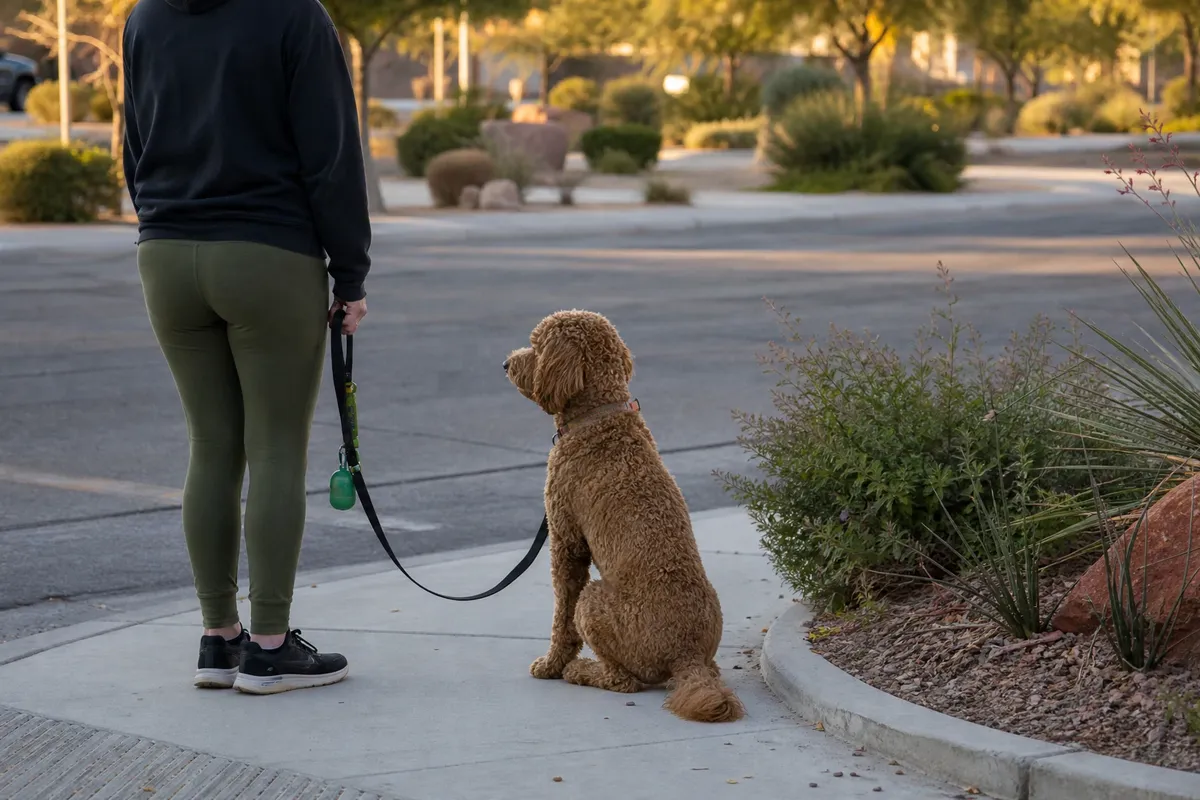
We teach it in layers, in a quiet place first. The sequence below is typical; your dog's pace sets the timeline. Our methods are reward-based, with management and prevention, gradual raising of distraction and short consistent sessions.
- Indoors: reward the dog for being next to you, then add a few steps
- Driveway or patio: walk with a loose leash for short stretches, rewarding often
- Quiet street: add turns and stops, plus a "go sniff" release so walks stay fun
- Mild distractions: practice near a lawn, a parked car or a calm person at a distance
- Real routes: build to your normal walk and thin rewards slowly
A release cue matters. When the dog knows it will get to sniff after walking nicely, loose-leash walking between sniffs is much easier to ask for. We use humane tools only. Veterinary behavior bodies, including AVSAB and AAHA, advise against aversive tools such as prong, choke and shock collars, and a pulling dog does not need pain, only clearer teaching.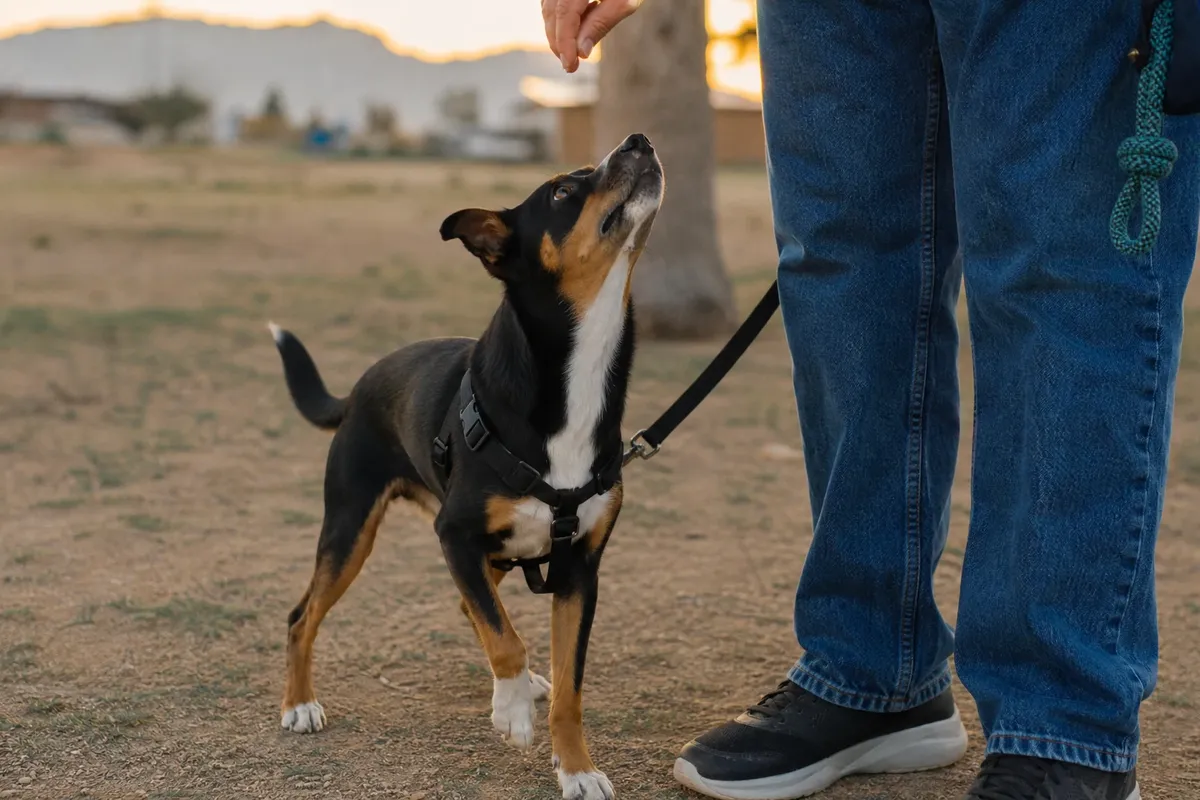
How do North Las Vegas weather and rules shape walks?
Heat is the first factor. Clark County Animal Protection Services says pavement can be 40 to 60 degrees hotter than the air, up to 160 F, and a few seconds can burn paw pads. It recommends walking pets in the early morning or late evening, and says that if it is too hot for the back of your hand, it is too hot for your pet's paws. A hot, hurried walk makes pulling worse, so we plan cooler routes and shorter, more rewarding practice.
The city's rules set the leash frame: all pets must be leashed at all times unless confined on or within the owner's property, per the City Animal Protection page, with a fine up to $1,137 per offense. The page states no leash length, and we could not confirm one from the municipal code. In city parks, dogs must be leashed outside designated areas, and are barred from sports fields, sports courts, skate parks and children's play areas. Nevada State Parks caps leashes at six feet at Ice Age Fossils State Park, and the National Park Service says dogs must be leashed at Tule Springs Fossil Beds. Last verified 2026-11-17.
Desert wildlife matters on walks. NDOW recommends a six-foot leash and never letting a dog put its head into holes or unseen places in snake country, March to October. A dog that walks beside you is easy to steer away from a snake, a coyote or a hot patch of asphalt.
What does a common North Las Vegas pulling situation look like?
A common situation North Las Vegas owners face: a 60-pound dog who pulls hard toward the Craig Ranch dog parks, then is too wired to enter calmly. The pull has already been rewarded many times with the gate opening. The fix is to make the walk to the park the training, not the part before the fun.
We would split it: pick a quieter route first, reward position near you, stop at each curb, and only enter the park when the leash is slack. We would also keep the dog out of hot pavement and use a front-clip harness for control while the skill builds. Another example is a dog that pulls toward neighbors' gates; there, we use turns and distance, because the pull is often a reaction to barking. If your dog lunges and barks, our leash reactivity page covers that case.
One audience insight: with roughly 36% of North Las Vegas households renting (RentCafe, secondary), many walks start in a shared hallway or stairwell, so we teach calm door and elevator manners before the walk begins.
Should I choose in-person or online for pulling?
In-person lessons are usually better for strong pullers, because a trainer can fit the equipment and watch your timing on the street. Online lessons can work for a calm dog and an owner who films short clips. Tell us when you choose a program if your dog has ever lunged at or bitten someone.
See private in-home dog training and online dog training, or choose in-person or online to start. For the next step after loose leash, recall training builds on it.
Frequently asked questions
Will a front-clip harness fix pulling?
It can reduce the pull while you teach, but it does not teach loose-leash walking. Pair it with rewards for walking beside you.
Do I need a special leash length?
A standard leash you can control is enough. The city page states no leash length, so we cannot cite one as a city rule; NDOW advises six feet in snake country.
My dog pulls because he is excited. What do I do?
Start in a quieter place, use shorter sessions and reward calm. Excitement drops when the dog learns the routine pays off.
Can I walk my dog in summer afternoons?
Clark County advises early morning or late evening and the back-of-hand pavement test. Midday asphalt can burn paws within seconds.
How long until my dog stops pulling?
It depends on the dog and on your consistency. Short daily practice is the biggest lever.
Keep reading
- Basic obedience trainingRead more →
- If it is lunging, not just pullingRead more →
- Private in-home dog trainingRead more →
- Online dog trainingRead more →
- Recall trainingRead more →
- Choose in-person or onlineRead more →
Sources
- City of North Las Vegas, Animal Protection Services (last verified 2026-11-17)
- City of North Las Vegas, Parks and park rules (last verified 2026-11-17)
- Clark County, pet heat safety news release (May 2025) (last verified 2026-11-17)
- Nevada State Parks, Ice Age Fossils State Park (last verified 2026-11-17)
- National Park Service, Tule Springs Fossil Beds pets page (last verified 2026-11-17)
- Nevada Department of Wildlife, Living With Rattlesnakes (last verified 2026-11-17)
- City of North Las Vegas, Craig Ranch Regional Park (last verified 2026-11-17)
- RentCafe, North Las Vegas rental market (secondary) (last verified 2026-11-17)
- AVSAB Humane Dog Training Position Statement (Purdue Canine Welfare Science Center) (last verified 2026-11-17)
- AAHA 2015 Canine and Feline Behavior Management Guidelines (last verified 2026-11-17)
Tired of being towed down the block? Tell us where you walk and how your dog pulls.
- In-person training in North Las Vegas and nearby areas
- Online training anywhere
- Reward-based methods only