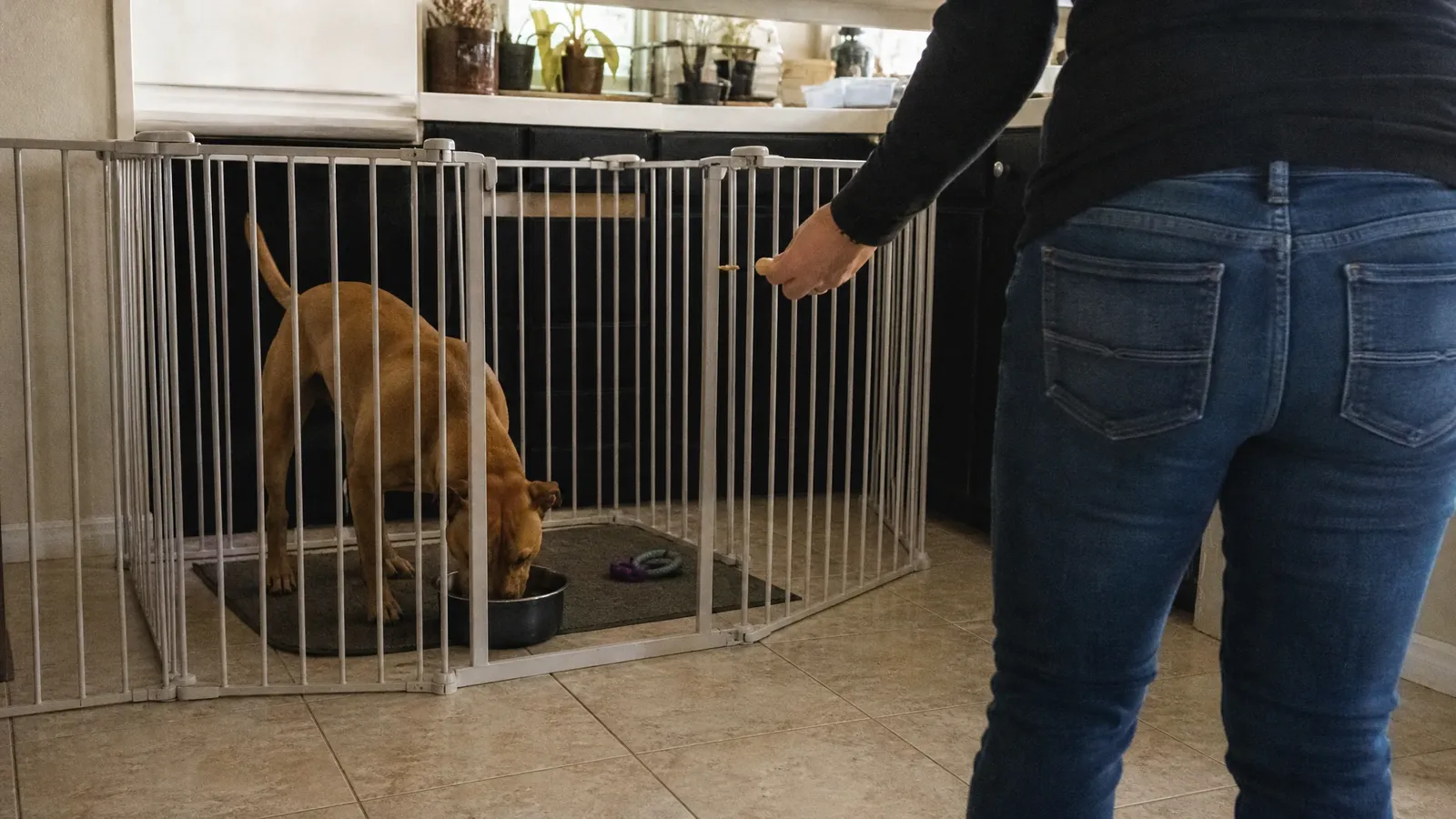
Resource guarding is a dog protecting something valuable, with a freeze, growl or snap, and it is usually driven by worry that the item will be taken. We help North Las Vegas owners keep everyone safe and teach dogs that people approaching means something good happens, never by taking things away by force.
Tell us what your dog guards, from the food bowl to a favorite spot on the couch
- In-person training in North Las Vegas and nearby areas
- Online training anywhere
- Reward-based methods only
Why does my dog growl when I come near food or a toy?
A growl is communication: "please do not take this." Dogs guard because they have learned, or fear, that the item can disappear. Punishing the growl removes the warning but not the worry, and the next signal may be a bite.
| What is guarded | What it often looks like | First step |
|---|---|---|
| Food bowl | Freezing, growling, eating faster | Feed in a separate space; no hands in the bowl |
| Chews and bones | Taking the item away and hiding it | Give them in a gated spot; trade up |
| Toys | Stiffening or snapping when approached | Use trade-up games with high-value treats |
| Resting spot or couch | Growling when approached | Invite instead of moving; teach a mat |
| A person | Snarling at others near the person | Management plus distance practice |
Pain can lower tolerance, so book a vet exam. Read our aggression guide if anyone has been bitten.
What should I do today?
Make guarding unnecessary, then make approaches pay off.
- Do not reach for the bowl or pull a chew away. It teaches your dog to guard harder.
- Feed in a quiet spot with a door or gate, and give high-value chews only when your dog can be left alone.
- Pick up valued items when the dog is elsewhere, and keep children away from eating or chewing dogs.
- Walk past the bowl and toss in a bit of better food. Your approach should predict a bonus, not a loss.
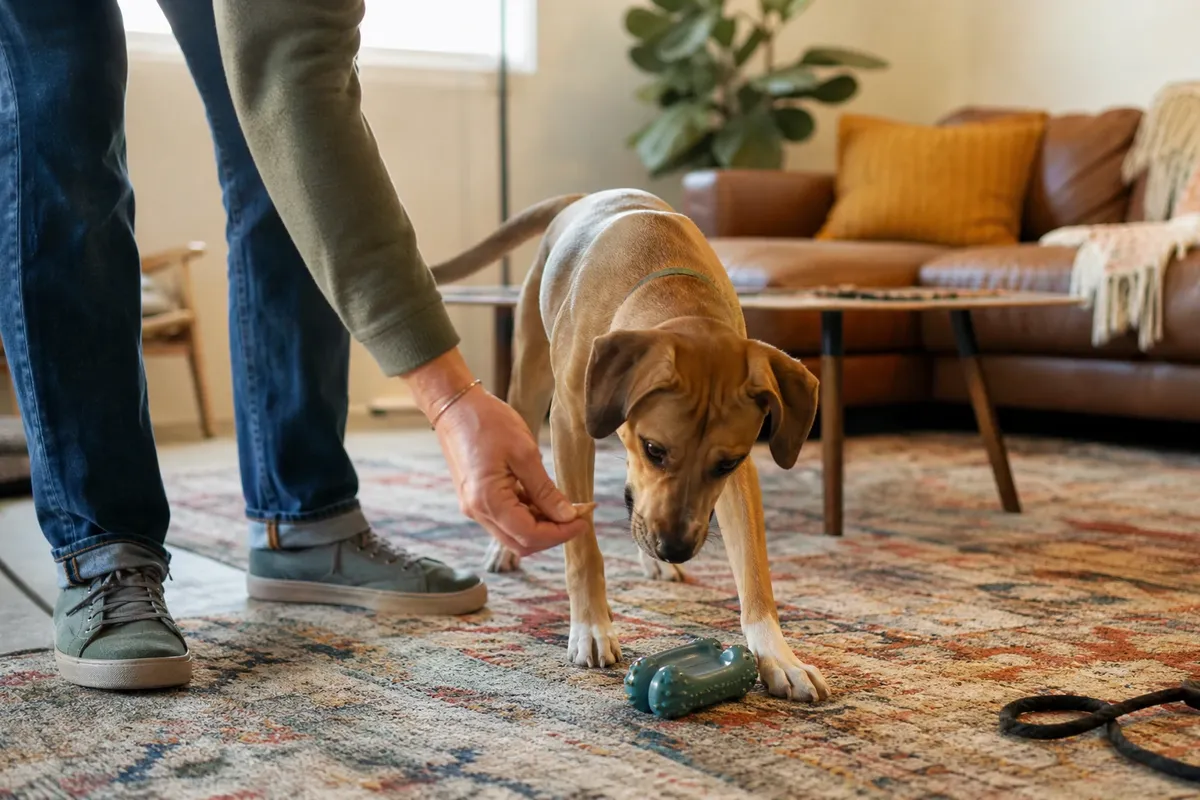
- Teach "drop" and "trade" with low-value items first, using a treat in exchange.
- Do not play tug or keep-away games with guarded objects until the plan is in place.
If your dog freezes, stiffens or snaps, stop and call it a day; pushing for "just one more try" is how bites happen. Tell us about any bite history when you choose a program.
What should North Las Vegas households know?
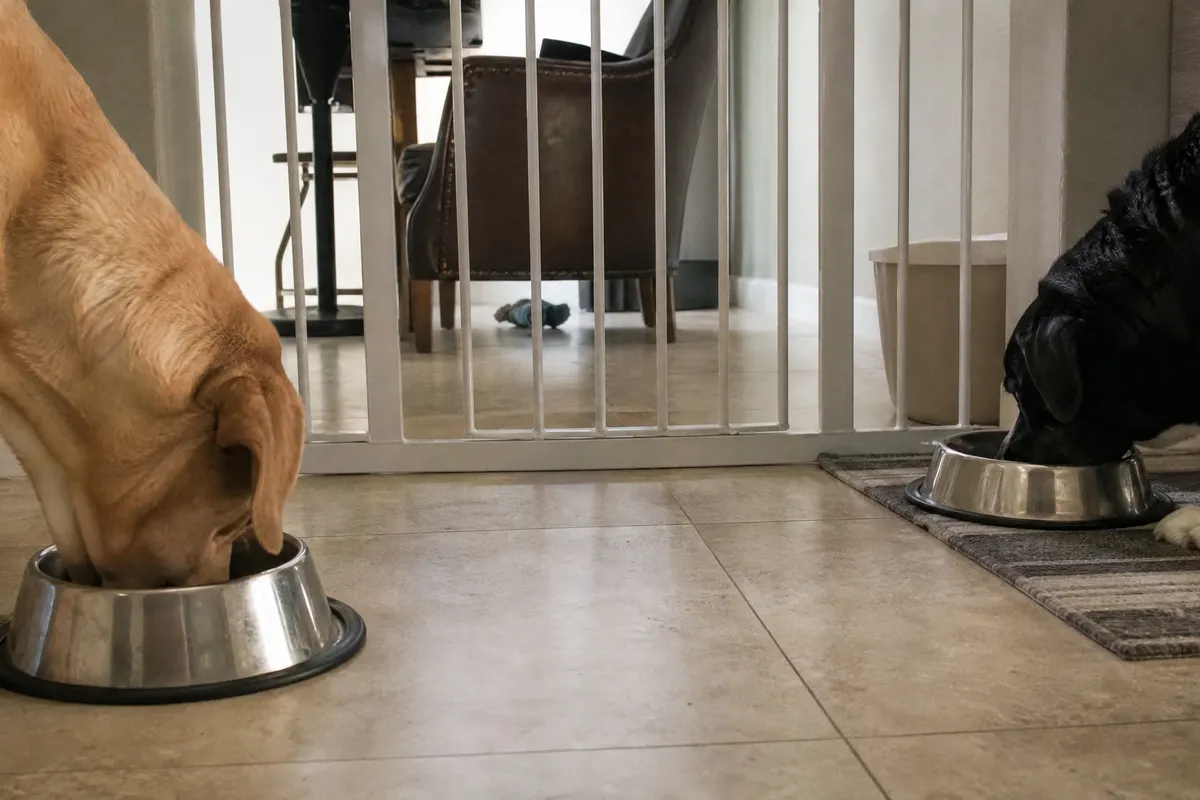
The city's pet limit shapes some guarding cases. The city page says a maximum of three dogs, three cats and three ferrets are allowed at any one location or residence, and fancier permits are available for more (see Pet Licenses). Multi-dog homes see guarding between dogs more often because they share bowls, beds and your attention. Feeding dogs apart and giving each its own chew and rest area is a habit we set up early.
Many adopters here bring home a dog from The Animal Foundation, the contracted shelter for the City of North Las Vegas, Las Vegas and unincorporated Clark County (see Clark County Animal Protection Services). The shelter's page says its adoption process takes a few hours and includes a short counseling session about the household (The Animal Foundation). New dogs often show guarding only after a few weeks in a home, and a quiet, structured start is the best prevention. See our rescue and shelter dog guide.
State law matters if guarding turns into a bite. Nevada state law (NRS 202.500) defines "dangerous" and "vicious" dogs and does not allow a label based solely on breed (see NRS chapter 202); we could not confirm the city's own ordinance text. Safety first, then training.
A common situation North Las Vegas owners face: a newly adopted dog in a shared apartment, a toddler learning to crawl and a dog who growls at the water bowl. Gates and a feeding spot out of reach solve the first week; the rest is training.
Last verified 2026-11-17. Shelter and adoption details can change, so check the Animal Foundation's current pages before you act on anything here.
How do we train resource guarding?
We lower the dog's worry by teaching that people approaching is good news, working below the level where your dog tenses up.
- Management first: separate feeding, gates and a "leave it" plan for guests.
- Approach-and-reward: from a safe distance, we toss better food as you step in and step out.
- Trade games: swap items for treats so giving up has a payoff.
- Consent signals: teach your dog to choose to drop or give an item, so it feels safe.
- Family coaching: everyone follows the same rules, especially around children.
We do not use dominance methods, pinning or forced take-aways. Veterinary behavior bodies (AVSAB, AAHA) advise against aversive methods (see AVSAB). Progress depends on the dog and your consistency.
Is in-person or online training better for guarding?
In-person is usually the better fit if your dog has bitten or guards from several people, because we need to watch the dog's body language up close. Online coaching suits mild cases and follow-up. Compare in-person private training with online dog training, then choose your program.
Frequently asked questions
Is resource guarding the same as aggression?
It is a type of aggression-related behavior, but its cause is protecting something valued. The plan is more specific: manage the item and teach trades, rather than treating the dog as dangerous in general.
Should I take the food away to show who is boss?
No. Taking food by force teaches your dog the worry was right and tends to make guarding stronger. We reward the approach instead.
Will my rescue dog always guard?
Not always. Many dogs settle once they feel secure in a new home. Early management and trades help, and progress depends on the dog and your consistency.
Can I keep my dog around children if he guards?
Keep them apart around food, chews and toys until a trainer has seen the dog. Supervision alone is not enough, so use gates and separate spaces.
Does my dog need a vet check?
Yes, if guarding is new or severe. Pain, dental problems or illness can make dogs more protective.
Keep reading
- Dog aggression helpRead more →
- Rescue and shelter dog trainingRead more →
- North Las Vegas shelters and rescuesRead more →
- In-person private dog training in North Las VegasRead more →
- Online dog training in North Las VegasRead more →
- Choose in-person or online trainingRead more →
Sources
- City of North Las Vegas, Pet Licenses (page opened via archive snapshot) (last verified 2026-11-17)
- Clark County Animal Protection Services, FAQ (last verified 2026-11-17)
- The Animal Foundation, adoption page (last verified 2026-11-17)
- Nevada Revised Statutes chapter 202 (NRS 202.500, dangerous and vicious dogs; state law) (last verified 2026-11-17)
- AVSAB humane dog training position (via Purdue Canine Welfare Science Center) (last verified 2026-11-17)
Tell us what your dog guards, from the food bowl to a favorite spot on the couch
- In-person training in North Las Vegas and nearby areas
- Online training anywhere
- Reward-based methods only